
Happy New Year - A Stoic’s Perspective
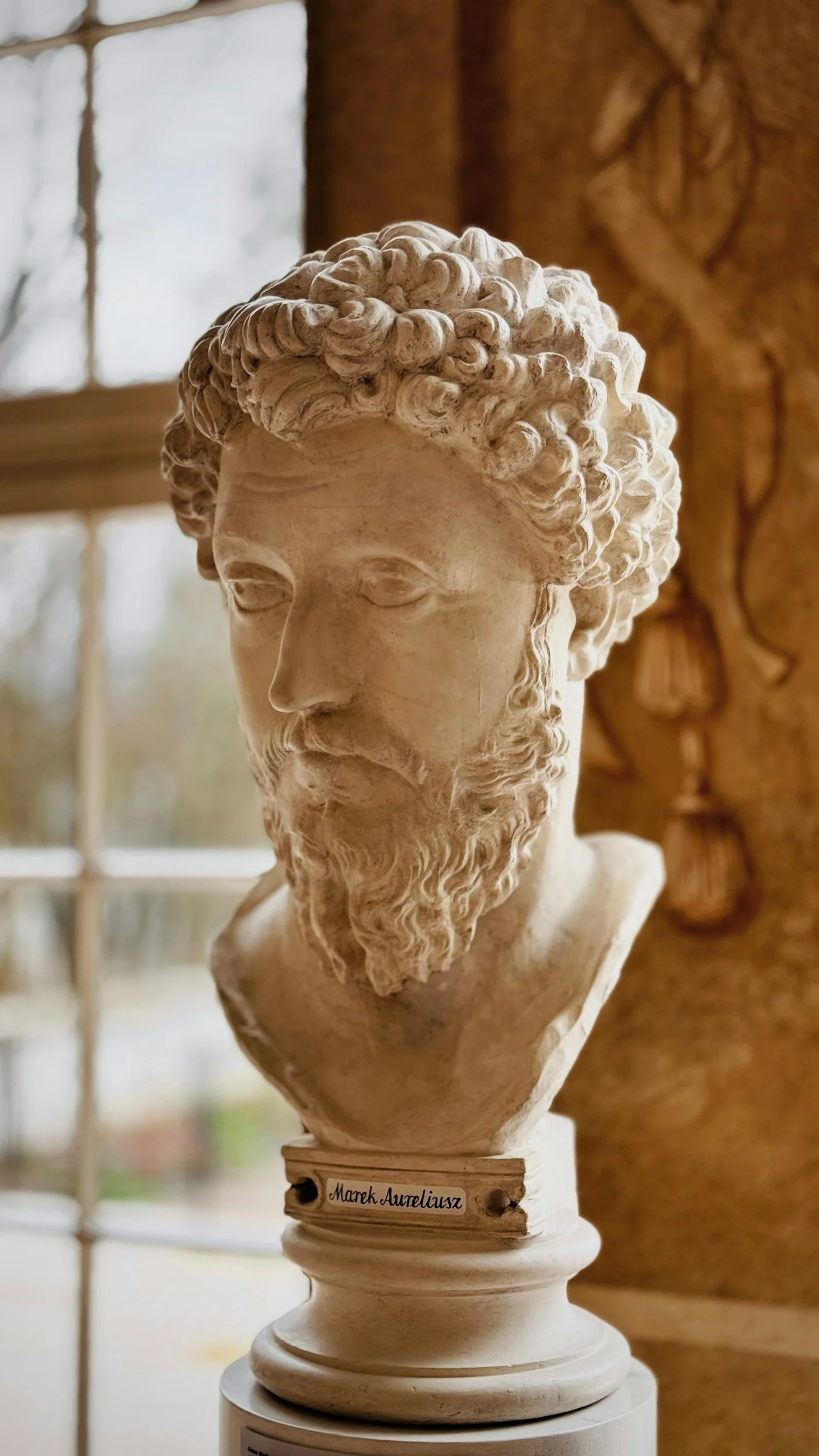
A bust of Marcus Aurelius
Inviting intention through a Stoic’s lens
The start of a new year often brings talk of resolutions. We are encouraged to set ambitious goals, change habits, and somehow become “better” versions of ourselves. For many, this can feel energising at first, but also exhausting or overwhelming. There is pressure to perform, to prove that we are disciplined, motivated, and capable of sticking to whatever plan we’ve written down. If you’re anything like me you fall after the first 3 days and end up feeling worse about yourself. So why do we set ourselves up for failure?
The Stoics offer a perspective that can help us approach this differently. They remind us that we cannot control everything, and that striving for moral and emotional steadiness matters more than chasing outcomes we have little power over. Marcus Aurelius wrote about focusing on what is within our own control, and letting go of what is not. So when it comes to resolutions, how about choosing actions - or intentions - that reflect our values rather than following a trend or ticking off a checklist.
Self-care is one of the most Stoic things we can do. It is not indulgence or laziness; it is the conscious attention to our own well-being so that we can live in accordance with our principles. Saying no to things that drain us, taking time to rest, noticing when our energy is low, and setting clear boundaries are all acts of self-care. They create the conditions for steady, thoughtful action instead of frantic, fleeting bursts of effort that fizzle out by February - or earlier!
When we set a boundary, we are recognising what we need to thrive and the limits of what we can give. This can be with work, family, friends, or even ourselves. In the context of New Year resolutions, boundaries allow us to pursue change in a sustainable way. They remind us that transformation is a process, not a single heroic push.
Resolutions framed through this lens might look very different. Instead of “I will run 5K every week,” or “I will be productive from 7am to 5pm,” a Stoic approach might be: “I will take care of my body in ways that suit my energy,” or “I will do my work with attention and honesty, and rest when I need to.” These goals acknowledge reality, respect limits, and honour what we can control.
The new year can be an opportunity for reflection rather than self-criticism. It can be a chance to consider what values we want to live by, how we can act in alignment with them, and what support we need to maintain that balance. When self-care and boundaries are part of the picture, resolutions stop being a source of pressure and become a practice of steady, conscious living. In this way, we start the year not with harsh demands on ourselves, but with clarity about what matters and the courage to live in a way that respects both our ambitions and our limits.
For more on the Stoic philosophy, a great way to start your morning with daily inspiration is The Daily Stoic by Ryan Holiday.
