
Understanding anxiety: what it is and why it shows up the way it does
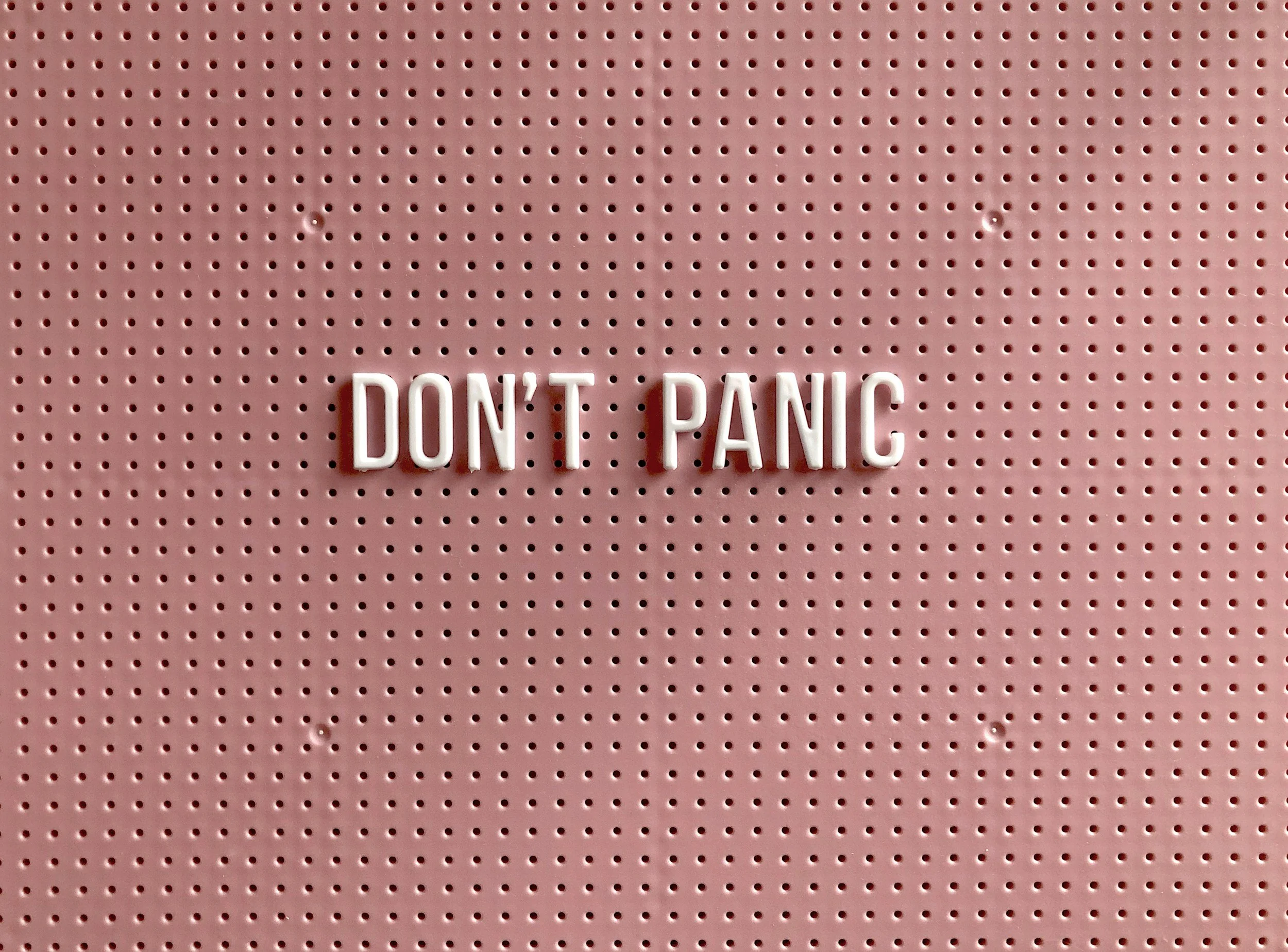
The words Don’t Panic in white letters on a pink peg board
Anxiety is your nervous system trying to protect you from a threat that, most of the time, isn't actually present. Understanding it that way, as an overactive protective response rather than a personal flaw, changes a lot about how you can respond to it.
What is anxiety actually doing?
At its core, anxiety is your body preparing you for danger, whether or not real danger is present. Your heart rate rises, your thoughts start scanning for problems, your muscles tense, all so you'd be ready to act quickly if something threatening appeared. This system (fight or flight) worked well for genuine physical danger, and it still does its job when the threat is real. The trouble is that it doesn't distinguish especially well between a real emergency and an email you're dreading reading, a decision you're second-guessing, or a presentation you need to give to your peers. The body responds the same way regardless of whether the threat is imminent or imagined.
Why does it feel so hard to just calm down?
Because anxiety isn't a thought you can talk yourself out of, it's a physical state, and physical states respond to physical and relational interventions far more reliably than to logic alone. Telling yourself there's nothing to worry about rarely works, because your nervous system isn't asking to be reasoned with, it needs to feel safe which is an important distinction. It means the goal isn't to win an argument with your anxious thoughts, it's to help your body register that the danger has passed, or was never as immediate as it felt.
What actually helps with anxiety?
Slower, physical approaches tend to work better than mental ones alone. Grounding through the senses, slowing your breath out for longer than you breathe in, moving your body, these all send a direct signal to your nervous system that you're safe right now, in a way words often can't. Naming what you're anxious about, out loud or on paper, can also help because it moves the anxiety from a vague, formless dread into something specific enough to actually think about.
It's also worth remembering that anxiety often has a history. If it shows up disproportionately in certain situations, relationships, or moments of uncertainty, that pattern usually has a reason behind it, even if the reason isn't obvious straight away. Anxiety isn't a sign that something is wrong with you. It's a sign your protective system is working overtime, and overtime is something that can, with the right support, eventually ease off.
I offer a free, no-obligation 15 minute chat to anyone considering counselling in Norwood Junction, SE25 or online throughout the UK. No pressure or commitment, just a conversation to see if we're a good fit. Get in touch here
